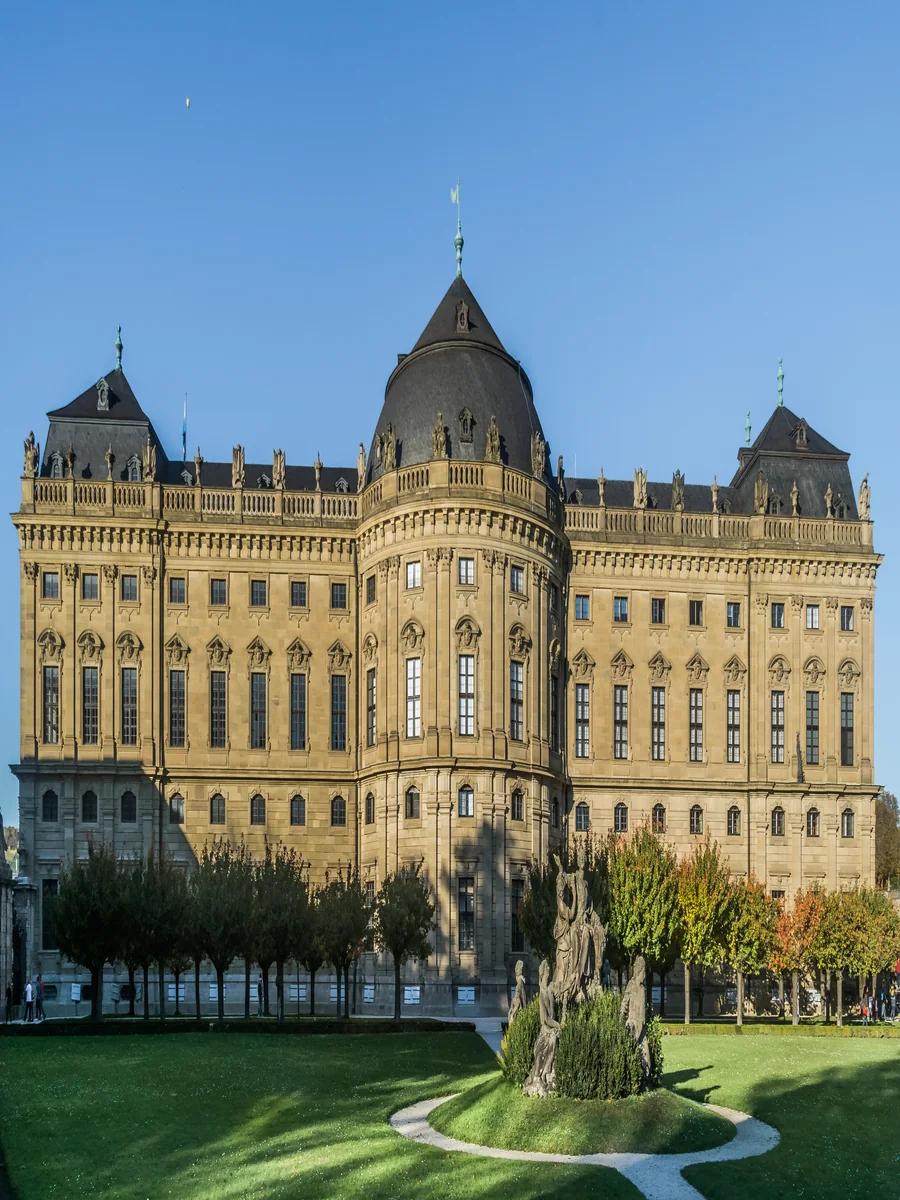
The Würzburg Residence is one of the most complete and dazzling Baroque palaces in Europe — the former seat of the Prince-Bishops of Würzburg, raised between 1720 and 1744 by the great architect Balthasar Neumann with an international team of the age's finest artists. It was among the very first German monuments inscribed on the UNESCO World Heritage List, in 1981, and a single visit explains why.
The palace's showpiece is its grand staircase. Neumann threw a single unsupported vault over the ceremonial ascent, and across that vault the Venetian master Giovanni Battista Tiepolo painted, in 1752–53, the largest ceiling fresco in the world — a luminous open sky in which the Four Continents pay homage. You climb up beneath it at your own pace, and it changes character with every step.
Beyond the staircase lie the ceremonial state rooms: the White Hall, a cool masterpiece of white rococo stucco, and the Imperial Hall, a blaze of colour, gilding and further Tiepolo frescoes. Deeper in, the Mirror Cabinet — destroyed in 1945 and painstakingly recreated from fragments — glitters as one of the palace's most moving rooms. The main halls are self-guided; the more delicate rooms are shown on guided tours included in your ticket. Outside, the Court Church and the Court Garden are free to all.
We are a concierge service: you choose your visit date, we arrange and secure your admission, and a print-at-home ticket arrives in your inbox — ready to show at the entrance so you skip the queue at the cash desk. No wrestling with an unfamiliar booking site; just your ticket, in English, in your email.